01 / INPUTS
Research methods
- Depth interviews
- Diary studies
- Ethnography
- Usability testing
- Card sorting
- Prototype testing
- Multi-cohort programmes
- Stakeholder interviews
Senior User Researcher · Defence & Government
Available from
15 Sep 2026Outside IR35 · Remote / hybrid · London–Kent
Evidence for complex services, from frontline operations to AI adoption. I work in government’s more complex corners — defence, justice, trade, weather — where services are high-stakes, regulated, and often behind a security fence.
Public-sector and international experience.
Defence, government, international and technology.
Every GDS phase and service assessment.
Perfect DfE GDS assessment as lead researcher.
Presented by Kofi Annan.
Research for a Google product before global launch.
06 engagements · open for depth
Led a multi-method programme across OFFICIAL-SENSITIVE and SECRET environments, including depth interviews, a diary study and moderated sessions with analysts, data scientists and RAF users. Set the portfolio research strategy and consolidated hundreds of refined insights into a governed user-needs repository.
Identified and visualised cross-classification tooling and workflow gaps. Interactive evidence packs informed platform and investment decisions, while user evidence supported the department’s work on AI adoption and a new defence AI task force.
Researched with frontline mechanical engineers and filmed sessions in barracks. Turned the findings into journey maps and a service blueprint, then helped shape a prototype microservice using the GOV.UK Design System — part of a wider Defence Digital run delivering discoveries, alphas and betas across Defence Support and Fleet Maintenance services.
The research showed that engineers needed visibility of stock availability so they could make practical decisions about repairs and sequence work. The beta was approved across UK barracks, with potential for global expansion.
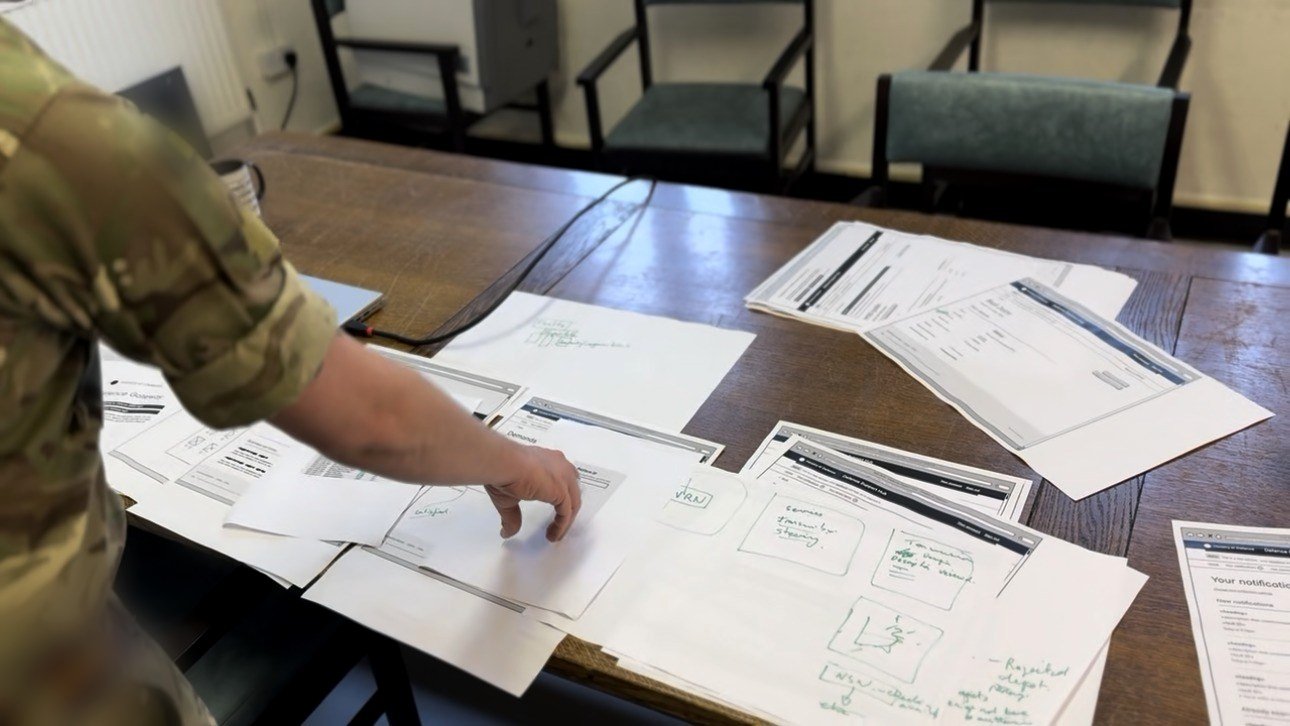
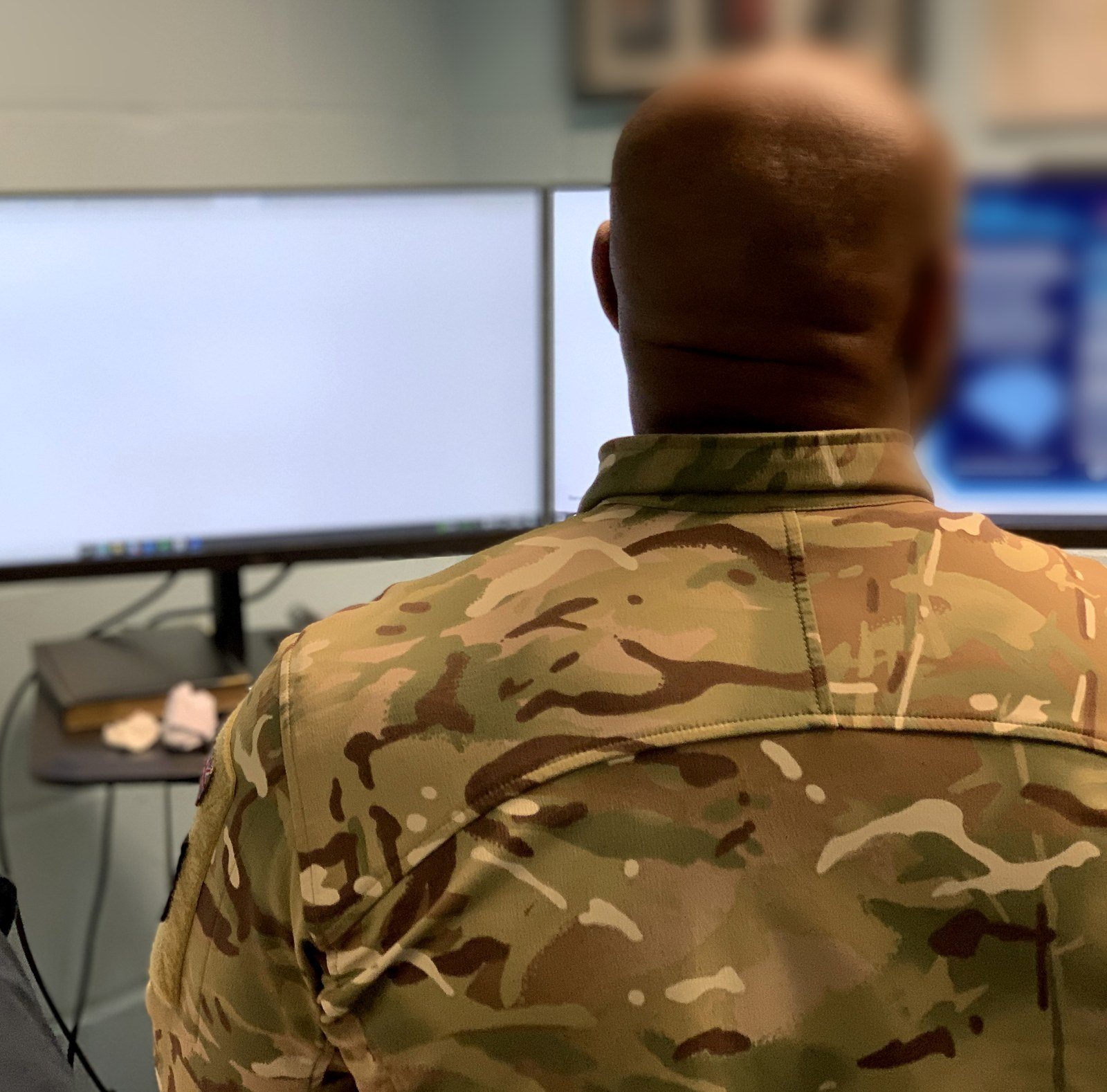
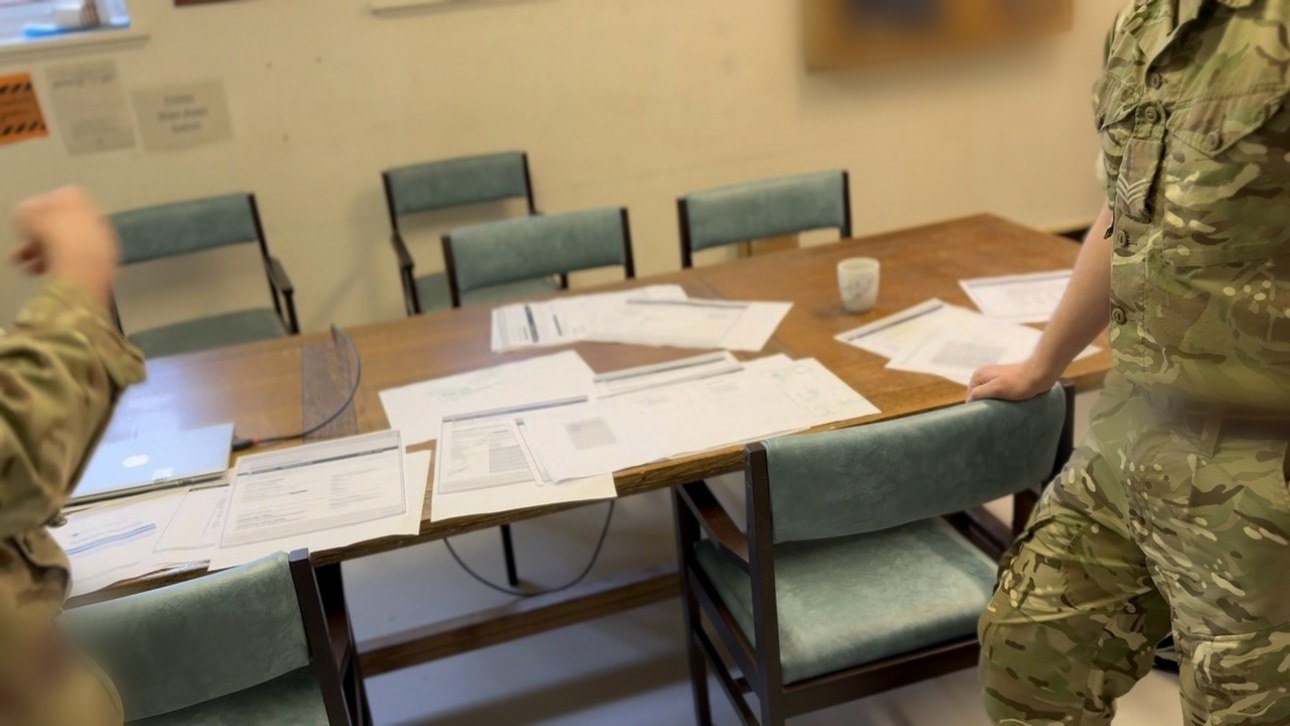
From the fieldwork: paper prototypes and moderated sessions, run on site with the people the service is for. Faces and identifying markings are kept out of frame or blurred.
Delivered user research through discovery, alpha and beta phases for the Supplier Cyber Protection Service as part of the wider Defence Digital portfolio.
Full case study in progress — happy to walk through this one on a call.
Led provider-facing research for controlled legal-aid work in private family law, housing and debt. Designed and facilitated interviews, usability tests and thematic analysis with legal providers, Citizens Advice and contract managers.
Delivered the evidence behind a provider-escalation model and a client front door for self-initiated legal aid. Produced Miro journey maps, persona sets and prototype-evaluation summaries to align policy, design and delivery.
Led stakeholder and professional-user interviews, card sorting and prototype testing for the national Met Office website. The work explored navigation needs across citizens and professional users.
Synthesised the findings into journey maps, personas and thematic insights that drove the new information-architecture strategy.
Built on a comprehensive school-focused discovery, then led the research through design and delivery: depth interviews, surveys and workshops mapping the end-to-end journey of finding teacher training — deliberately recruiting users with accessibility needs and varying digital literacy.
The service passed its GDS assessment with a perfect 18/18 score and went live — it is still serving the public today. A wall-sized map of the entire journey and an empathy video of teachers’ real challenges kept every decision anchored to the user. Visit the live service →
Visual research practice
I turn research into artefacts that designers, product people and decision-makers can use and get their heads around quickly — maps, models, repositories and evidence packs that keep the user present after the session ends.
Sticky notes and the wall · Figma for personas and artefacts · Miro · ConceptBoard. The tool follows the thinking, never the other way around.
AI in the workflow where it earns its place. User research into organisational adoption. Advice for safe adoption in regulated firms through Upkurve Ltd.
UCD × AI
User evidence for AI adoption across MOD’s defence data services, including early research support for a new task force standing up AI development capability.
Practical, daily use of AI and agentic tools in the research workflow. Interview depth stays human; tools support the work where they add genuine value.
Through Upkurve Ltd, I advise regulated organisations on safe adoption — applying user-centred thinking to the people, process and evidence around AI.
The reading behind it — four questions, answered from the public record
UR × AI: state of play · 26 findings, each with its source →05 voices from the work
“I would thoroughly recommend working with James and adding his skills and experience to your team.”
“His passionate commitment to user-centred design has been invaluable to our team.”
“I highly recommend James to any organisation looking to elevate their product through deep understanding of user needs.”
“James was great to work with — he made my life easy during a high-intensity workload by being very proactive.”
“The research uncovered a far more critical business problem; Engineers could not see items available for issue, and so were unable to make practical decisions about equipment repairs.”
Selected evidence · 2005–2020
Education · BSc (Hons) Neuroscience, University College London · MA Journalism, Gimlekollen School of Journalism and Communication.
Available from 15 September 2026
Contracts via Upkurve Ltd · outside IR35 · remote or hybrid across London and Kent.